When to Schedule Septic Pumping, Drain Cleaning, or Sewer Cleaning in Eugene, OR
Business Name: Royal Flush Environmental Services
Address: 2640 State Hwy 99 N, Eugene, OR 97402
Phone: (541) 687-6764
Royal Flush Environmental Services
Royal Flush Environmental Services is a plumbing company offering a full range of septic system services, including cleaning, installation, and repairs. Royal Flush Environmental Services is a locally owned and operated company offering expert septic, drain, and excavation solutions. Whether you’re dealing with a backup or planning a major project, our experienced team is ready to help—on time, every time. Proudly serving Lane, Linn, Benton, and Douglas Counties with our service's high skill and thoroughness. No job is too big or small for our highly skilled team.
2640 State Hwy 99 N, Eugene, OR 97402
Business Hours
Homeowners in Eugene normally do not begin thinking of wastewater until something slows down, backs up, or smells incorrect. Already, the task is no longer about routine upkeep. It has to do with figuring out which system needs attention, how urgent the problem is, and whether the ideal fix is septic pumping, drain cleaning, sewer cleaning, or a more involved repair.
That distinction matters more than many people recognize. A kitchen area sink that drains gradually can be a basic blockage in the branch line, or it can be a caution that the primary sewer line is having a hard time. A toilet that gurgles after a shower may point to a venting issue, however it can likewise signal a full septic tank or a root blockage downstream. Eugene homes bring their own peculiarities, too. Older homes near the town hall typically have aging piping, fully grown trees, and blended plumbing updates from various years. Rural and fringe-area homes might depend on septic systems that need a various sort of care than a home linked to community sewer service.
Knowing when to schedule the ideal service conserves cash, safeguards the residential or commercial property, and minimizes the chances of an untidy emergency situation on a Saturday night.
The very first concern is not what you want, but what the system is informing you
Most wastewater problems produce small warnings before they end up being obvious. The error I see usually is dealing with every slow drain as the same issue. It is not.
If the problem is isolated to one sink or one tub, the cause is typically local. Food accumulation, soap scum, grease, hair, or foreign items might be trapped because component's branch line. That is where drain cleaning generally makes one of the most sense. If multiple drains are sluggish at the very same time, or if toilets begin bubbling when another component runs, the issue is broader. At that point, sewer cleaning becomes more likely, especially if the main building drain or sewer lateral is restricted.
Septic pumping is various once again. A septic system can appear to work typically for a long time, then unexpectedly start revealing symptoms when the tank is overdue for service. The indication may consist of sewage smells, damp spots around the drain field, toilets that flush sluggishly, or wastewater backing up into low components. Septic pumping does not fix broken pipes or a stopped working drain field, however it does remove the solids and scum that develop inside the tank. If the tank is too complete, or if sludge has actually moved too far through the system, pumping might be the primary step before any other diagnosis.
The cleanest way to think of it is this: drain cleaning addresses fixture-level clogs, sewer cleaning addresses the main line or lateral, and septic pumping addresses the tank itself. They overlap in signs, which is why good judgment matters.
When drain cleaning is the right call
Drain cleaning is normally the best option when one area of your house is impacted and the rest of the plumbing behaves normally. A bathroom sink that takes 30 seconds to empty, a tub that holds water around your ankles, or a kitchen area drain that gurgles after dishwashing are traditional examples. Oftentimes, these are not remarkable failures. They are gradual limitations that diminish the pipeline opening little by little.
In Eugene, kitchen drains frequently gather grease and great food residue, specifically in homes where cooking happens daily and the line has a couple of bends before it reaches the main drain. Restroom drains tend to accumulate hair, toothpaste, soap movie, and mineral residue. Homes with long-haired citizens, teenagers who utilize a great deal of item, or older low-flow components can see accumulation faster than they expect.
Drain cleaning is likewise worth scheduling when you notice repeat obstructions in the same component. If you clear the stoppage with a plunger or a hand snake and it comes back within a couple of weeks, there is probably an underlying constraint that needs to be removed more thoroughly. A professional cleaning can flush out the line instead of just punching a small hole through the blockage. That often purchases a a lot longer stretch of regular use.
There is another reason to pick drain cleaning earlier instead of later on. Localized clogs can mask bigger patterns. A sluggish kitchen sink may seem harmless up until grease builds up enough to interfere with the branch line and then the primary line. When that takes place, the repair gets more complex. A basic service call handled at the first signs of problem is almost always much easier than waiting for a full backup.
Signs that point toward sewer cleaning instead
When the signs spread throughout your home, sewer cleaning is worthy of a better look. The main sewer line brings wastewater from the home to the community system or to the septic tank inlet. If that line is partially blocked, whatever downstream becomes less predictable.

One of the most typical indications is a pipes system that seems to choke when numerous fixtures are used in a brief period. A shower and toilet run fine separately, however together they trigger gurgling. Or the washing maker drains, and a nearby toilet burps air. That sort of behavior usually suggests a restriction farther along the line, not simply a blockage in one fixture.
Another idea is recurring backup in the most affordable drain. Basements and slab-level utility room frequently expose the issue initially because gravity offers wastewater the easiest location to surface. If sewage comes up through a floor drain, the issue is hardly ever cosmetic. Sewer cleaning might clear the blockage if the line is blocked by roots, scale, sludge, or a foreign things. If there is a break, collapse, or serious offset in the pipeline, cleaning might restore momentary flow but not fix the long-lasting issue.
Tree roots deserve unique reference in Eugene. Mature landscaping can look fantastic above ground and be an annoyance below it. Roots look for moisture and can get in old joints, cracked clay, aging cast iron, or compromised PVC connections. Once they get a grip, they catch toilet tissue and debris, then the blockage grows. Sewer cleaning can remove the instant obstruction, however if roots are aggressive or the pipe is damaged, the line might require repair planning afterward.
A cam inspection often helps separate a basic blockage from a structural problem. That step is especially beneficial if the home has a history of repeated backups or if the line has not been serviced in years.
When septic pumping ought to move to the top of the list
If your residential or commercial property uses a septic system, pumping is not optional maintenance. It is a scheduled task that safeguards the tank and the drain field. The precise timing depends upon home size, tank size, water use, and how much solids the system gets. A household of 4 with a normal domestic setup may need pumping every 2 to 5 years, often sooner if the tank is smaller or the home uses a lot of water. That range is broad because septic systems are impacted by routines as much as by hardware.
You ought to not wait on sewage odor or standing water before scheduling septic pumping. By the time those symptoms appear, the tank may currently be overfull, and solids might have started moving into locations they must never ever reach. As soon as solids leave the tank and clog the drain field, the repair becomes a lot more expensive.

There are a couple of practical indications that the tank may be due. Toilets may flush slowly despite the fact that the bowls and traps are clear. Drains may act regular one day and sluggish the next. The yard above the septic location might appear greener or wetter than the remainder of the residential or commercial property. You may discover smell near the tank cover, the drain field, or even inside your home throughout warm weather. None of those signs proves a complete tank by itself, but together they are enough to validate a service call.
I have actually seen homeowners delay pumping because everything still "mostly worked." That generally ends severely. Septic systems are forgiving up until they are not. Once the solids overwhelm the tank, the warning signs show up quick. A pump-out is far less expensive than field replacement.
How to decide between pumping, drain cleaning, and sewer cleaning
The option boils down to where the issue lives.
If one fixture is the only one impacted, begin by believing drain cleaning. If the entire house appears to resist drainage, particularly in numerous spaces, sewer cleaning ends up being most likely. If the property has a septic system and the symptoms involve odors, sluggish flushes, wet ground, or a long period because the last service, septic pumping need to rise to the top.
There are exceptions, naturally. A full sewage-disposal tank can imitate a sewer backup. A blocked sewer line can look like a bad kitchen drain. A vent problem can mimic both. That is why the very best field diagnosis typically starts with a couple of cautious observations instead of a guess.
The timing of symptoms helps too. A blockage that establishes all at once after a specific occasion, such as putting grease down the sink or flushing an item, frequently points to drain cleaning. A problem that gets worse slowly over months, especially with root intrusion or heavy home use, can indicate sewer cleaning or septic pumping. A line that supports just during heavy rain might recommend a drain or seepage concern, which can be connected to sewer repair or septic repair depending upon the system type.
Homeowners often ask whether they need to simply attempt a store-bought chemical cleaner initially. In my experience, that is rarely a good long-term response. Chemical drain openers can damage older pipes, and they normally do not deal with the kind of accumulation that causes repeat trouble. Mechanical cleaning or correct maintenance is a more secure bet.
What makes Eugene residential or commercial properties a little different
Eugene has a mix of older neighborhoods, newer infill, tree-heavy streets, and rural edges where septic systems remain typical. That variety changes the maintenance picture.
Older homes might have pipes with decades of wear, shifts in positioning, or patchwork updates done by various owners. A line that as soon as worked fine can become vulnerable to scale, root intrusion, or drooping after years of ground movement. Residences with large maples, oaks, and developed landscaping are more likely to see root-related sewer cleaning requirements. Residence on bigger lots outside the city core might depend upon septic installation that was sized for a various household pattern than the present one, specifically if the home was remodeled or occupancy changed over time.
Rain matters too. Eugene's wet season can reveal weaknesses that stay hidden in drier months. Saturated ground does not directly cause a septic system to fail, however it can make it easier to discover drain field problems, slow absorption, or surface area seepage. In sewer-connected homes, heavy rain can reveal loose joints, seepage issues, or overloaded private laterals. Those problems do not always need immediate excavation, but they ought to not be neglected either.
People often assume that if the system worked last year, it should still work this year. That is not how wastewater systems age. They respond to utilize, soil conditions, pipe condition, and upkeep history. A little attention at the right time prevents a lot of damage later.
Where septic repair and septic installation fit into the picture
Pumping keeps a septic system functioning as it should. Septic repair addresses something that has stopped working, such as a harmed lid, inlet septic repair or outlet problem, broken baffles, distribution concerns, or drain field trouble. Septic installation comes into play when a residential or commercial property requires a brand-new system or a replacement for one that has reached the end of its service life.
Those distinctions matter because not every septic grievance can be resolved with upkeep. If a tank is pumped on schedule however the drain field still stops working to take in water, the issue might be in the soil or the circulation network. If a tank lid is cracked or a baffle is missing, solids may leave and cause duplicated problem no matter how carefully the home is used. If the home is new to septic service, or if a remodel altered tenancy and water demand, the initial setup may no longer match the property's needs.
That is where experience pays off. An excellent technician does not assume every septic grievance suggests a pump-out. Often septic repair is the real response. Sometimes the system is beyond regular repair and requires a thoughtful prepare for septic installation. The objective is not simply to eliminate a sign. It is to restore a reputable system that can manage everyday usage without surprise failures.
A useful maintenance rhythm that generally works
For lots of Eugene homeowners, the simplest approach is to stay ahead of issues rather of responding to them. If your drains are slowing in one space, schedule drain cleaning before a blockage spreads. If you have repeat gurgling or backups in several components, call for sewer cleaning and ask whether a camera inspection makes sense. If you own a septic system, track the pumping interval and do not let memory choose for you.
The best upkeep rhythm depends on the home, but routine attention generally looks like this in real life. A kitchen area that gets day-to-day cooking might need drain cleaning regularly than a visitor bath. A sewer line under mature trees might need periodic cleaning even if the home has not backed up. A septic system serving a larger household, or a home with heavy laundry usage, may need pumping faster than the average quote. If you have had prior septic repair, keep a record of what was repaired and when, since that history often forecasts the next weak point.
This is where a little paperwork assists. Keep the dates of service, the signs that caused the call, and any notes about what the specialist found. Those details are important when something changes later. A line that was cleared of roots 2 years earlier might need a different technique now. A septic tank that filled unusually quickly after a brand-new garbage disposal was installed might require a modification in practices, not simply another pump-out.
Paying attention before the emergency saves cash and stress
Most wastewater emergencies do not start as emergencies. They begin as a sluggish sink, an unusual odor, a toilet that sounds various, or a patch of lawn that stays greener than it should. The sooner you match the sign to the best service, the much better the outcome tends to be.
Drain cleaning is the ideal relocation when the concern remains regional and repeat obstructions are becoming routine. Sewer cleaning makes more sense when the whole house is included, specifically if roots, scale, or a main-line clog are suspected. Septic pumping is important when a tank is due, when smells and slow drains suggest solids are developing, or when you wish to protect the drain field before damage starts. If the issue goes beyond maintenance, septic repair or sewer repair might be needed, and septic installation ends up being pertinent when the existing system can no longer get the job done reliably.
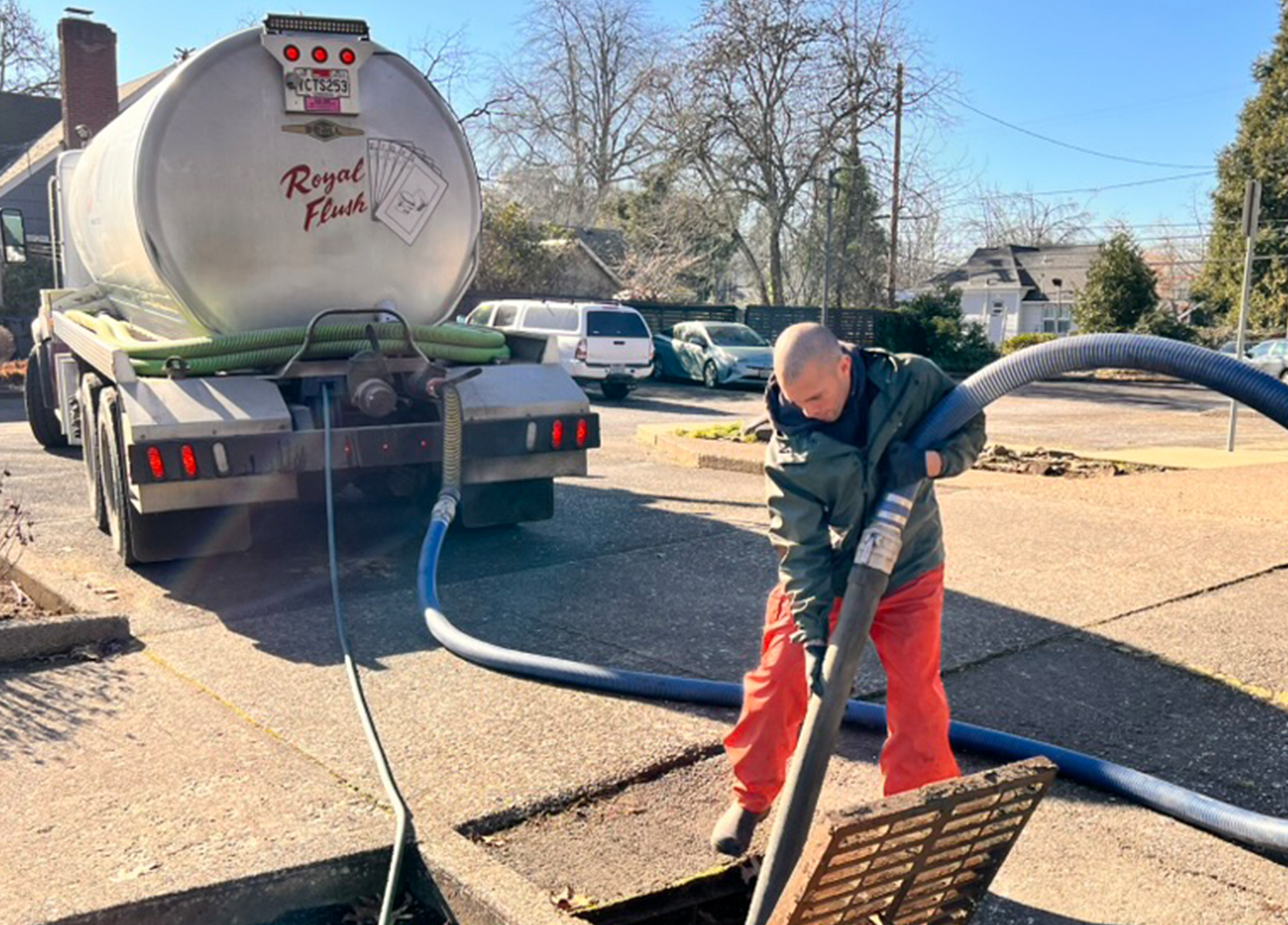
The homes in Eugene are not all built the very same, and their wastewater systems are no various. A thoughtful diagnosis, followed by the right service at the right time, keeps the pipes quieter, the yard cleaner, and the repair costs smaller.
Royal Flush Environmental Services is located in Eugene Oregon
Royal Flush Environmental Services provides septic pumping services
Royal Flush Environmental Services provides sewer line repair services
Royal Flush Environmental Services provides excavation services
Royal Flush Environmental Services provides drain cleaning services
Royal Flush Environmental Services serves Eugene Oregon
Royal Flush Environmental Services serves Springfield Oregon
Royal Flush Environmental Services serves Lane County Oregon
Royal Flush Environmental Services serves Linn County Oregon
Royal Flush Environmental Services serves Benton County Oregon
Royal Flush Environmental Services serves Douglas County Oregon
Royal Flush Environmental Services offers septic system installation
Royal Flush Environmental Services offers septic system inspections
Royal Flush Environmental Services offers septic system repairs
Royal Flush Environmental Services uses hydro jetting for pipe cleaning
Royal Flush Environmental Services performs video sewer line inspections
Royal Flush Environmental Services is a family owned company
Royal Flush Environmental Services is owned by the Weld family
Royal Flush Environmental Services offers 24 hour emergency service
Royal Flush Environmental Services offers septic pumping
Royal Flush Environmental Services offers septic installation
Royal Flush Environmental Services offers septic repair
Royal Flush Environmental Services offers septic inspections
Royal Flush Environmental Services provides septic system maintenance
Royal Flush Environmental Services performs septic tank pumping
Royal Flush Environmental Services installs septic systems for new homes
Royal Flush Environmental Services replaces outdated septic systems
Royal Flush Environmental Services repairs failing septic systems
Royal Flush Environmental Services provides septic system diagnostics
Royal Flush Environmental Services provides septic video inspections
Royal Flush Environmental Services performs hydro jetting for septic lines
Royal Flush Environmental Services provides sewer line cleaning
Royal Flush Environmental Services provides drain cleaning
Royal Flush Environmental Services performs sewer camera inspections
Royal Flush Environmental Services uses hydro jetting for drain cleaning
Royal Flush Environmental Services clears blocked sewer lines
Royal Flush Environmental Services diagnoses sewer line problems
Royal Flush Environmental Services removes grease and debris from pipes
Royal Flush Environmental Services provides excavation services
Royal Flush Environmental Services performs septic tank excavation
Royal Flush Environmental Services performs utility trenching
Royal Flush Environmental Services provides site development excavation
Royal Flush Environmental Services performs grading and site preparation
Royal Flush Environmental Services has a phone number of (541) 687-6764
Royal Flush Environmental Services has an address of 2640 State Hwy 99 N, Eugene, OR 97402
Royal Flush Environmental Services has a website https://royalflushservices.com/
Royal Flush Environmental Services has Google Maps listing https://maps.app.goo.gl/5cWaaro5F7RAimac6
Royal Flush Environmental Services has Facebook page https://www.facebook.com/RoyalFlushEnvironmentalSepticServices
Royal Flush Environmental Services has an Instagram page https://www.instagram.com/royal.flush.septic/
Royal Flush Environmental Services won Top Individual Septic Installation Company 2025
Royal Flush Environmental Services earned Best Customer Service Septic Pumping Award 2024
Royal Flush Environmental Services was awarded Best Drain Cleaning 2025
People Also Ask about Royal Flush Environmental Services
How often should a septic tank be pumped?
Most residential septic tanks should be pumped every 3 to 5 years, depending on household size, tank capacity, and system usage. Regular pumping helps prevent backups, odors, and costly repairs.
What are the signs that my septic system needs service?
Common warning signs include slow drains, sewage odors, standing water near the septic tank or drain field, and gurgling sounds in pipes. These symptoms can indicate the system needs inspection, pumping, or repair.
What does septic pumping do?
Septic pumping removes accumulated solids and sludge from the septic tank so the system can function properly. Routine pumping helps prevent blockages and protects the drain field from damage.
When should a septic system be inspected?
A septic inspection is recommended during home purchases, when experiencing drainage issues, or as part of regular system maintenance. Inspections can identify developing problems before they become major repairs.
What happens during a video sewer or septic inspection?
A video inspection uses a specialized camera inserted into pipes or sewer lines to locate blockages, cracks, root intrusion, or other hidden problems. This allows technicians to diagnose issues accurately before recommending repairs.
Can Royal Flush Environmental Services install a new septic system?
Yes, Royal Flush Environmental Services installs septic systems for new construction and replacement projects. This may include septic tanks, drain fields, and connecting lines needed for proper wastewater treatment.
What septic repairs are commonly needed?
Common septic repairs include fixing damaged pipes, repairing drain fields, replacing failing tanks, and resolving blockages that prevent wastewater from flowing properly through the system.
What is hydro jetting for sewer and drain lines?
Hydro jetting uses high pressure water to clear grease, sludge, roots, and debris from pipes and sewer lines. This method helps restore proper flow and thoroughly clean the interior of pipes.
Do you offer sewer line cleaning services?
Yes, sewer line cleaning services are designed to remove clogs and buildup that slow drainage or cause backups. Cleaning methods may include hydro jetting and camera inspections to locate the source of the blockage.
Do you provide excavation services for septic projects?
Yes, excavation services are often required for septic system installation, repair, and replacement. Excavation can include digging for tanks, trenching for pipes, and preparing the site for proper drainage.
What types of excavation services are offered?
Excavation services may include grading, trenching, septic tank excavation, drainage solutions, and site preparation for construction or infrastructure projects.
Can excavation help with drainage problems?
Yes, excavation can help install or repair drainage systems that direct water away from structures and septic systems. Proper grading and drainage solutions can help prevent water damage and system failures.
Do you install underground utility lines?
Yes! Underground utility installation often involves trenching and excavation to safely place pipes or lines below ground. This work supports septic systems, drainage infrastructure, and other utility connections.
Do you offer emergency septic or sewer services?
Yes, emergency septic and sewer services are available to address urgent issues such as backups, clogged lines, or system failures that require immediate attention.
Where is Royal Flush Environmental Services located?
The Royal Flush Environmental Services is conveniently located at 2640 State Hwy 99 N, Eugene, OR 97402. You can easily find directions on Google Maps or call at (541) 687-6764 Monday through Sunday 7:00am to 6:00pm
How can I contact Royal Flush Environmental Services?
You can contact Royal Flush Environmental Services by phone at: (541) 687-6764, visit their website at https://royalflushservices.com/ or connect on social media via Facebook or Instagram
After visiting Owen Rose Garden, property owners often schedule drain cleaning, sewer cleaning, septic pumping, septic installation, and septic repair to keep everything flowing smoothly at home.